
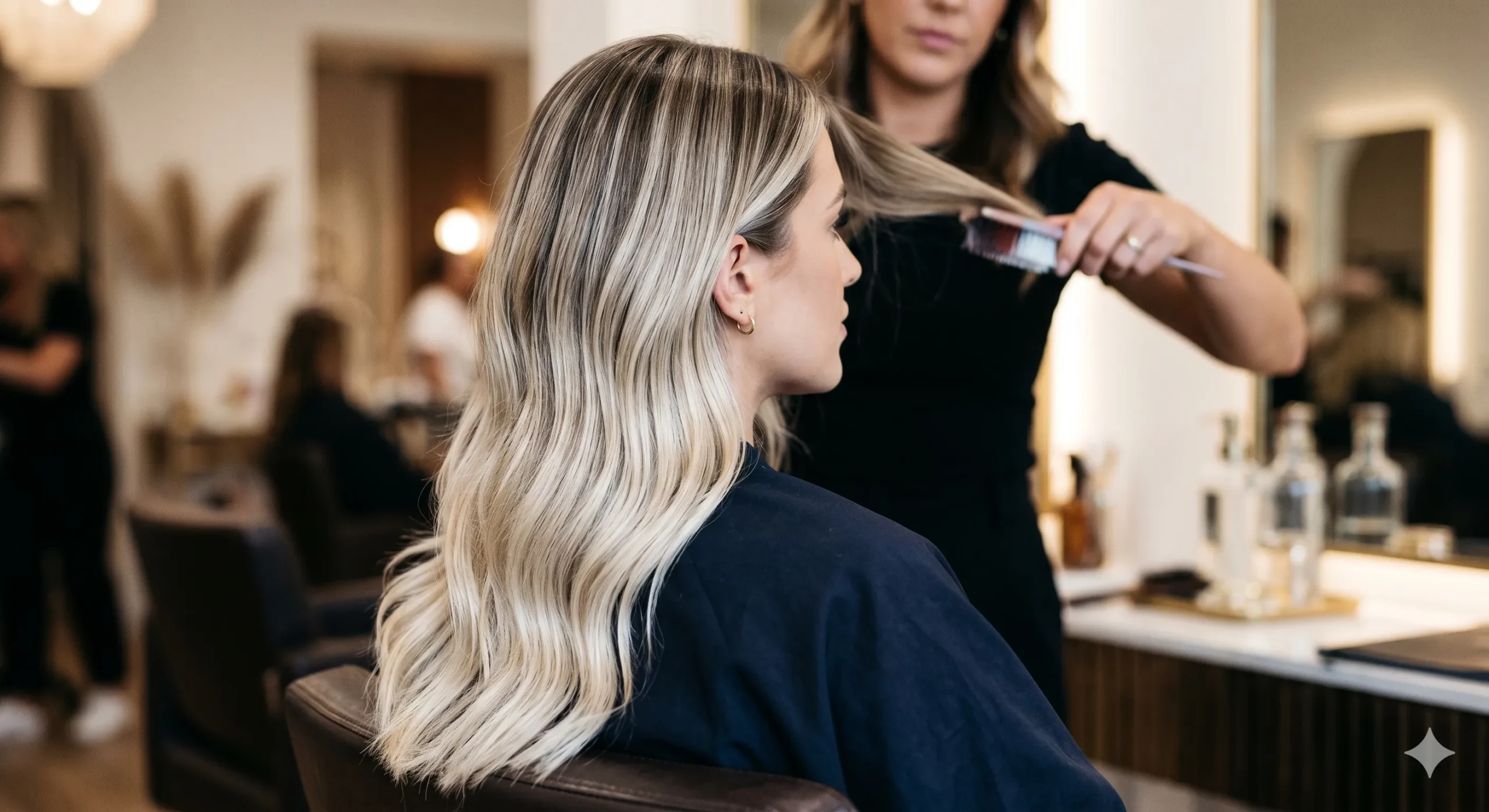
The quiet little technique that lets your blonde grow out gracefully, so your roots look like a choice, not a countdown.
There’s a specific kind of dread that comes with going blonde. You love the color, but a few weeks in, you catch your reflection and there it is: that hard line where your natural shade meets the blonde, announcing exactly how long it’s been since your last appointment. Root highlights are the fix for that, and honestly, they change the whole rhythm of being blonde.
Instead of a sharp border between your roots and the rest of your hair, root highlights blur that transition. Lighter pieces are woven in right where your hair grows out, so the regrowth softens into your blonde rather than fighting against it. You keep all the brightness you came for, but your roots start looking intentional and lived-in, the way blonde looks in real life rather than the day you leave the salon.
If you’ve ever felt a little trapped by the salon calendar, booking touch-up after touch-up just to stay ahead of your roots, this is the part where things get easier.
What root highlights actually are
The name sounds technical, but the idea is simple. Root highlights are just lighter pieces of color placed at your regrowth area to soften the line between your natural shade and your blonde. Nobody’s changing who you are or stripping everything to the same flat tone. They’re easing that grow-out so your hair reads as deliberate instead of overdue.
That’s why blondes get a little obsessed with them. They make the whole thing feel manageable. Rather than chasing one solid, high-commitment shade that betrays you the second it shifts, you let your roots become part of the look. The result is that sun-touched, slightly undone blonde that seems like you just woke up with it. You stay blonde, you stay yourself, and you stop watching the clock.
How your colorist creates them
Once you understand why they work, the how is genuinely satisfying to watch. It starts with a conversation. Your colorist will ask about your routine, how often you realistically get to the salon, where your hair tends to catch the light, and they map the whole thing around your actual life rather than a textbook.
Good root highlights are built around your life, not the other way around.
- Your hair gets sectioned, with the focus kept up near the root while your existing blonde stays in view as the reference point.
- Your colorist picks the technique that fits the softness you want, whether that’s foils, teasy lights, or a touch of balayage for dimension.
- The shade is feathered from the root down into the mid-lengths through careful blending, so there’s never a hard line to catch the eye.
- After processing and rinsing, a gloss or toner pulls everything together, so your fresh roots melt into your blonde and the whole head reads as one cohesive color.
Choosing the right root shade
This is where the magic lives or dies. The goal is a root that looks like it belongs to you, not one that looks grown-out or, worse, like a mistake. As a rule of thumb, your root sits about one to three levels deeper than the lightest blonde in your hair. That small gap is enough to add richness without ever reading as a stripe.
From there, it comes down to your undertone. Warm skin tends to glow next to soft honey, beige, and golden browns. Cooler skin usually feels more like itself in ashy or neutral taupes. If you’re not sure, bring photos of blondes whose hair makes you stop scrolling. It gives your colorist a feel for the vibe you’re after, and together you’ll land on a root that flatters your face and blends like it was always there.
How it compares to balayage, babylights, and foils
These words get thrown around the salon constantly, and it’s completely normal to lose track of which is which. Here’s the short version, with root highlights doing one specific job: softening your regrowth so your blonde feels effortless as it grows.
How often you’ll need a touch-up
Every head of hair grows on its own schedule, but most blonde root highlights look their best with a touch-up every 8 to 12 weeks. That window usually keeps your roots soft and blended rather than stripey or stark. If your hair grows quickly, or you love a brighter, higher-contrast blonde, you might find yourself closer to the 6 to 8 week mark.
Think of it as a spectrum rather than a hard rule. If a more lived-in look feels comfortable to you, stretching to 10 or 12 weeks is completely doable without feeling overgrown. The best signal is your own eye. When fading starts to make your blonde look dull, or your natural shade begins to overpower the highlights, that’s your hair telling you it’s time to book in.
Keeping them fresh at home
Your colorist sets the foundation, but what happens between appointments is mostly up to you. A few small habits make a real difference in how long your roots stay looking deliberate.
Cleanse gently Step 01
Reach for a sulfate-free shampoo and lukewarm water. Over-washing strips your tone and makes regrowth show up faster than it should.
Condition with intent Step 02
Keep conditioner on your mid-lengths and ends. Loading it onto the roots can leave them flat and a little greasy, which only emphasizes the line you’re trying to soften.
Protect your tone Step 03
Work a gentle purple shampoo into your routine now and then to keep brass at bay and your blend looking clean.
Style a little strategically Step 04
Soft waves, a texture spray, and a slightly off-center part all do quiet work blurring root lines and keeping everything looking effortless.
When a root melt or shadow root makes more sense
Root highlights aren’t always the right answer, and that’s worth knowing before you book. If what you really want is the softest possible grow-out and the least time in the salon, a root melt might serve you better. Your colorist blends a deeper shade down into your highlights so there’s no band and no obvious line, just a smooth gradient of dimension.
A shadow root works beautifully when you love your brightness but want your natural depth to feel included rather than corrected. A slightly darker root frames your features, makes blonde look thicker and richer, and buys you even more time between visits. If you’re moving away from an all-over blonde and want to feel polished while you transition, these are the techniques that carry you through.
The goal was never a blonde that needs rescuing every few weeks. It’s a blonde that grows the way you live: easy, warm, and unmistakably yours.