Caramel, honey, ash — and everything in between. Here’s how to find the shade that was made for you.
At a Glance
- Caramel balayage adds warm, soft dimension with a grow-out that practically styles itself.
- Honey balayage gives your face an instant glow while keeping your brunette depth beautifully intact.
- Ash balayage delivers a cool, smoky finish — polished, modern, understated.
- Match your tone to your skin: warm caramels for golden undertones, ash and beige for cooler ones.
- Keep colour lasting longer with a simple care routine — it makes all the difference.
That’s exactly what this guide is here to help with.
Caramel Balayage
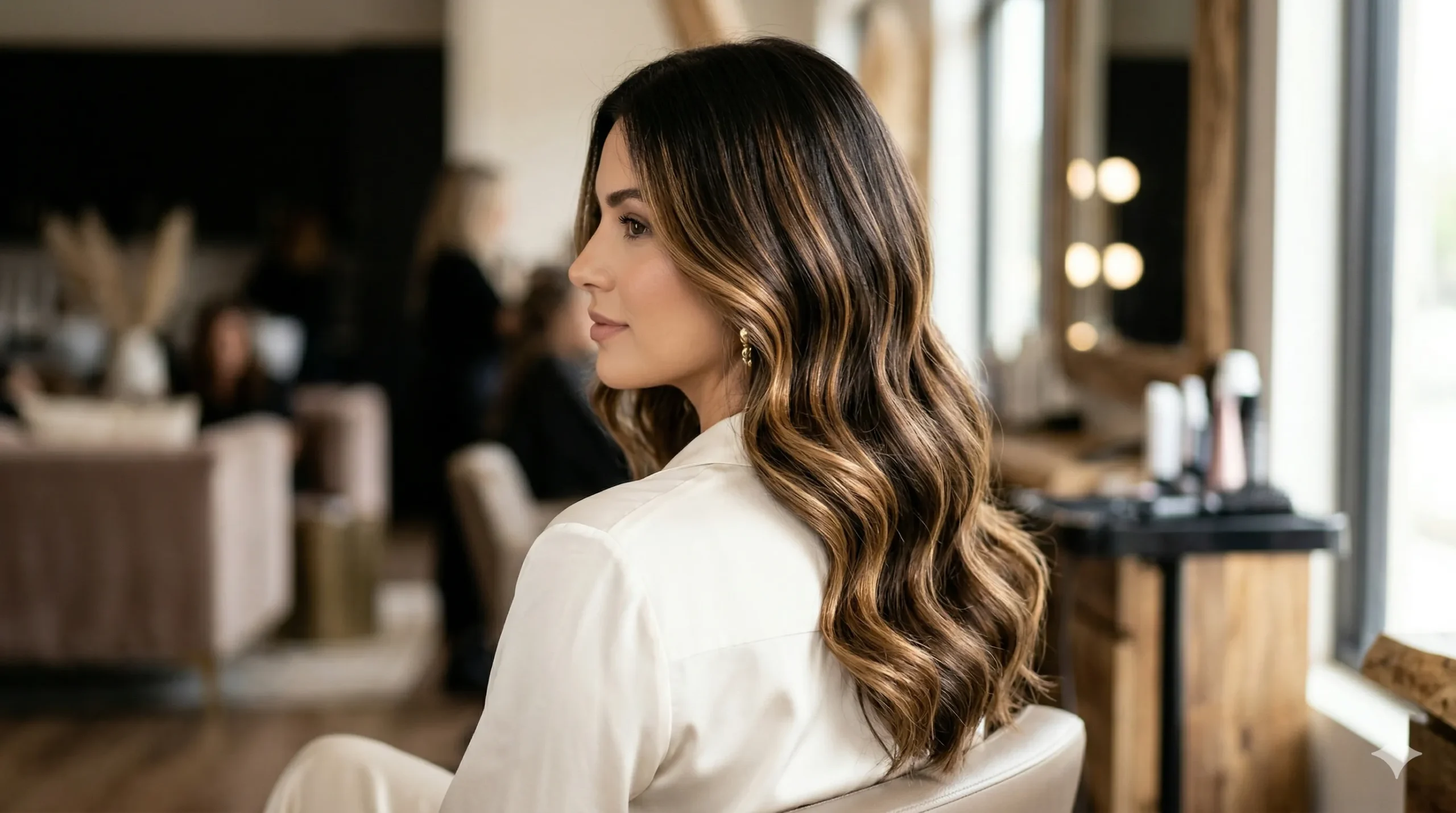
There’s a reason caramel balayage has never really gone out of style — it just works. On dark brown hair, it adds that sun-kissed warmth without ever looking like you tried too hard. Think of it as your hair’s best light: a soft, blended lift that catches the eye in all the right ways.
What makes caramel so reliably flattering is how seamlessly it complements rich brunette bases. Your stylist paints lighter ribbons through the mid-lengths and ends — wherever light would naturally hit — so the result looks less like a colour appointment and more like you just came back from somewhere warm. You keep the depth at the roots, gain brightness through the lengths, and end up with movement that makes your whole haircut look more intentional.
Caramel is the colour equivalent of golden hour — it flatters everything, and it never overstays its welcome.
The grow-out is genuinely low-maintenance. Because the colour is painted, not applied root to tip, there’s no harsh regrowth line to chase. You can stretch your salon visits without your colour ever looking neglected.
Best suited for warm or neutral undertones — though if your skin leans cool, your stylist can dial it back toward a more muted, buttery caramel that softens rather than clashes.
Honey Balayage
Honey is caramel’s slightly brighter, more luminous sibling. Where caramel warms, honey glows — and on dark brown hair, the contrast is stunning without ever tipping into harsh territory.
- Instant radiance. Lighter honey pieces placed around the face open up your features — eyes look brighter, cheekbones sit higher, and your whole complexion looks fresher without a drop of highlighter.
- Natural from the start. Good balayage technique means the colour is swept on where sunlight would naturally fall, so it looks like something that happened on holiday, not in a salon chair.
- Long-lasting appeal. Honey tones tend to age beautifully on dark hair, fading gradually rather than going brassy — so you’ll love it well past your next appointment.
If your skin has golden or peachy undertones, honey will feel like it was made specifically for you. It’s warm, welcoming, and just bright enough to feel like a proper change.
Chocolate Balayage — Subtle, Rich Dimension
Not everyone wants people to immediately clock their new hair colour. Sometimes you just want to look more yourself — shinier, more polished, more alive — without a dramatic shift. That’s exactly where chocolate balayage earns its place.
Because the tones stay close to your natural dark brown base, the result is all about depth and movement rather than contrast. Soft ribbons of warm chocolate through the lengths make hair look fuller and more dimensional in the light, while the overall colour stays cohesive and grounded.
It grows out beautifully — so beautifully, in fact, that some people barely notice when they’ve gone two or three months past their appointment. Ask your stylist to focus pieces around your face and through the ends for the most definition where it matters most.
Stylist Tip
Chocolate balayage works especially well if you want to warm up a box colour grow-out, or transition toward natural dark hair after a period of heavier highlighting. It’s an elegant bridge back.
Ash Balayage — Cool, Smoky & Modern
If warm tones aren’t your thing — if you’re drawn to cooler, quieter colour — ash balayage is worth a serious conversation with your stylist. On dark brown hair, ashy highlights create a smoky, dimensional finish that feels genuinely modern. Less glossy, more considered.
Ash tones don’t shout. They sit beautifully, adding a cool depth that makes dark brown hair look refined rather than flat.
- No harsh lines. Balayage technique means the ash melts into your base naturally, so it reads as dimension rather than streaks.
- Suits cooler skin tones perfectly. If your undertones lean pink, rosy, or olive, ash balayage complements rather than clashes — unlike warm tones which can fight cool complexions.
- Understated and versatile. It works just as well in a sleek blow-dry as it does in a textured bun. The colour does the talking without needing much else from you.
One thing to keep in mind: ash tones can occasionally pull a little icy if they’re taken too light for your base. Ask your stylist for a seamless blend with muted brightness — the goal is smoky warmth, not silver.
Face-Framing Balayage — Instant Lift, Maximum Impact
Not ready to colour your whole head? Face-framing balayage is one of the most effective shortcuts in the book. A few strategically placed lighter ribbons around your hairline — at the temples, along the front sections — and suddenly you look brighter, more rested, and somehow more polished.
The placement is tailored to your face shape. Softer, rounder pieces can balance angular jaw lines. Brighter placement at the temples can visually lift and widen narrower faces. It’s the kind of personalisation that makes you feel like the colour was designed specifically for you — because technically, it was.
Choose caramel, honey, or soft beige for a warm glow that complements dark brown bases without looking overdone. It’s a small change with an outsized return.
Subtle Balayage — The Art of Almost
There’s something quietly confident about hair that looks naturally beautiful — not obviously coloured, not trying too hard. Subtle balayage is for people who want that; the kind of dimension you notice without being able to quite pinpoint why.
- Ask for shades that are only one to two levels brighter than your natural base — close enough to look effortless, different enough to make a difference.
- Keep the root area soft and diffused. A hard line between lighter and darker sections is exactly what you’re avoiding here.
- Focus the lighter pieces through the mid-lengths and ends, where they add movement without changing the overall read of your colour.
The result? Hair that looks like it has always been that interesting. No one will guess it was a salon appointment — and that’s entirely the point.
Bold Balayage — High Contrast, High Impact
If you’ve been sitting with the same safe colour for a while and something in you wants to actually commit to a change — bold balayage is where you make your move. Brighter, more saturated ribbons sweeping through a deep dark brown base create a contrast that’s genuinely striking.
This isn’t the kind of colour that hides. It moves with your hair, photographs beautifully, and makes a cut look more dramatic without you needing to change it. Waves become more defined. Layers look more intentional. Everything gets a visual upgrade.
Bold balayage works best when there’s trust between you and your stylist — you want someone who understands how to keep the placement from looking streaky and the overall effect from tipping into dated territory. Get that right, and this is the kind of colour that makes you feel like yourself, only louder.
How to Choose the Right Balayage Tone
Trends are a starting point, not a destination. The most flattering balayage tone is the one that works with your actual features — not just the one that looked good on someone else’s Instagram.
Start with your undertone. If your skin has golden, peachy, or warm peachy tones — if you look better in gold jewellery than silver — lean toward caramel, honey, or amber. If your skin runs cooler — pinkish, rosy, or strongly olive — ash, beige, or mocha tones will sit more naturally.
Then think about contrast. Fair skin with dark hair can usually handle a broader range of highlight brightness. Medium and deeper skin tones often look stunning with mid-range balayage tones — enough to add dimension without creating a stark divide.
Finally, think about your eye colour. Warm amber eyes are beautiful alongside caramel. Cool grey or blue eyes can look incredible with ash tones that echo them. It’s a small detail that can push a good colour into a great one.
When in doubt, bring photos to your consultation — not to copy exactly, but to give your stylist a sense of the direction, contrast level, and warmth you’re drawn to.
Keeping Your Balayage Looking Its Best
The great thing about balayage is that it’s designed to grow out gracefully. But a little care goes a long way between appointments — and the difference between colour that looks fresh and colour that looks faded usually comes down to a few simple habits.
Switch to Sulphate-FreeRegular shampoos strip colour faster than anything else. A sulphate-free formula keeps your tones vibrant for longer and your hair healthier overall.
Deep Condition WeeklyHighlighted hair is more porous. A hydrating mask once a week brings back softness and shine — and helps your colour look more luminous, not dull.
Use Heat Protection AlwaysHeat strips colour. A thermal protectant applied before blow-drying or styling is non-negotiable if you want your balayage to last.
Address Brassiness EarlyA blue shampoo used once a week or fortnight keeps warm orange tones from creeping in. Use it sparingly — too much and it can dull the overall colour.
Trim Every Few MonthsSplit ends climb. Keeping the ends healthy means your balayage stays looking intentional, not ragged — and your overall colour looks cleaner.
Top Up When NeededMost balayage lasts three to five months before needing a touch-up. A gloss treatment in between can refresh the tone without a full appointment.
Stick to these and your colour will stay looking salon-fresh far longer than you’d expect.