If you’ve been staring in the mirror wondering whether your dark hair could pull off blonde highlights without turning into a brassy nightmare, you’re in good company. Going lighter when you start out brunette is absolutely doable, but the technique you choose changes everything. Let’s walk through it together.
What You’ll Take Away
- Balayage and sombré are your friends if you want low-maintenance, soft blending.
- Your skin’s undertone (warm, cool, or neutral) tells you which blonde shade to pick.
- Going truly blonde from dark hair means bleaching, and that’s a job for a pro.
- Toner is what kills brassiness. Violet cancels yellow, blue cancels orange.
- Bond-rebuilding treatments and purple shampoo at home stretch the time between salon visits.
Pick the Technique That Actually Suits You
Here’s the honest truth: not every highlight technique works on dark hair, and not every technique works for every lifestyle. Before you book anything, think about how often you genuinely want to be sitting in a salon chair.
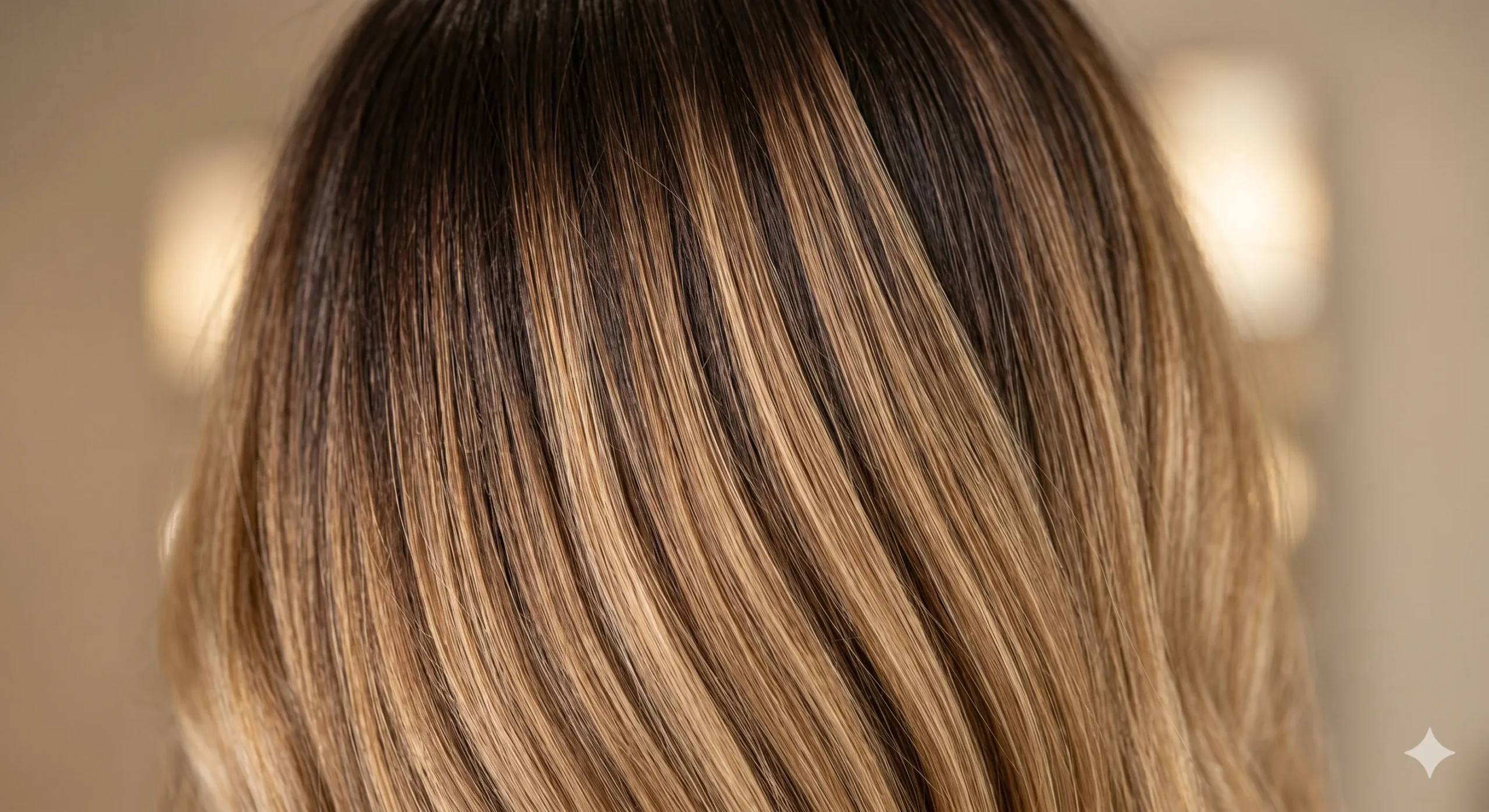
If you love the idea of waking up six months later and your color still looks intentional, balayage is probably your match. The hand-painted technique creates such a soft transition between your roots and the lighter pieces that growing it out looks deliberate, not neglected. Caramel and bronde tones blend especially beautifully here.
If you want drama, the kind that turns heads when you walk in somewhere, foiled highlights deliver that crisp, bright contrast. Icy ribbons through dark hair look striking, but you’ll be back at the salon more often.
Want something gentler? Sombré (a softer version of ombré) and face-framing pieces brighten you up without making a statement. They’re a lovely starting point if you’ve never gone lighter before.
Balayage gives you a grow-out that still looks pulled-together. Foils give you instant, undeniable brightness. Both are valid. Pick based on how often you actually want to be in the salon chair.
One more piece of advice: match the warmth of your highlights to the warmth of your skin. Warm undertones tend to glow with caramel and honey. Cooler complexions look fresh with ash blonde. More on that below.
Find the Blonde Shade That Suits Your Undertone
The reason some blondes look incredible on certain people and washed out on others usually comes down to undertone. Your skin has hidden warmth, coolness, or a mix of both, and your highlights either work with that or fight it.
A quick way to figure yours out: look at the veins on your inner wrist in natural light. Greenish veins usually mean warm undertones. Bluish or purple ones lean cool. If you genuinely can’t tell, you’re probably neutral, which honestly gives you the most flexibility.
- Warm undertones: Honey, caramel, and golden blondes amplify your natural glow beautifully.
- Cool undertones: Ash, platinum, and pearl shades calm any redness and brighten your face.
- Neutral undertones: Champagne and beige blondes are universally flattering on you. Lucky.
- Very dark or black hair: Cognac and maple highlights add richness without that jarring high-contrast look.
If your base is naturally very dark, easing in with light brown blonde highlights first creates a gentler progression than jumping straight to blonde.
Why You Genuinely Need to Bleach Dark Hair
Let me save you a heartbreak: standard at-home dye, no matter what the box promises, will not lift dark hair to true blonde. The chemistry just isn’t there. What you’ll get instead is brassy orange, and a lot of regret.
To actually go blonde from a dark base, your stylist needs to break down the natural pigment in your hair using bleach. There’s no clever shortcut around it. Dark hair contains a lot of melanin, and that melanin has to be lifted gradually before any blonde tone can show up properly.
This is also why the process often takes multiple sessions. A good colorist won’t try to take you from black to platinum in one sitting, and if anyone offers to, run. Pushing bleach too far in a single appointment is how hair snaps off at the root.
Be honest with your stylist about your hair’s history too. Box dye, henna, and previous chemical services all change how your hair lifts. The more they know, the safer the process.
Toner: The Secret to Killing Brassiness
Once your stylist has lifted your hair, you’ll see warm tones, usually yellow or orange, peeking through. That’s normal. That’s where toner comes in.
Toner works on simple color theory. Violet sits opposite yellow on the color wheel, so violet pigments cancel yellow. Blue sits opposite orange, so blue pigments cancel orange. Your stylist picks the right toner based on exactly how much warmth needs to be neutralized.
- Violet toners handle yellow brass, the most common issue after lifting.
- Blue toners tackle orange tones, which show up on darker bases that haven’t lifted as far.
- Ash and pearl formulas give you that cool, expensive-looking finish.
- Sulfate-free shampoos at home make your toner last considerably longer.
Some stylists also use pre-toning techniques before the final gloss, balancing the hair’s pH so the color sits evenly. It’s a small step that makes a big difference.
How Often Should You Book Touch-Ups?
This depends entirely on the look you went with, which is part of why technique matters so much.
Traditional foils on dark hair show regrowth quickly, especially if you went really light. Plan on every six to eight weeks, sometimes closer to six if your contrast is dramatic. Once that line of regrowth becomes obvious, the whole look reads less polished.
Balayage and lived-in styles are kinder to your schedule. You can comfortably stretch to three months, and many people go four to six. Add a root smudge at your appointment and you’ll buy yourself even more time before regrowth feels noticeable.
If your color starts looking dull between appointments but your roots aren’t an issue, ask about a gloss treatment. They take about thirty minutes, refresh your tone, and cost a fraction of a full highlight session. Every four to six weeks is a sweet spot.
Knowing your average hair growth (around half an inch a month for most people) helps you plan ahead instead of suddenly noticing a stripe of dark roots in a photo.
Protecting Your Hair Through the Bleaching Process
Here’s where it gets real. Bleach, by design, is aggressive. It has to be, to lift that much pigment. The good news is breakage isn’t inevitable if you go in prepared.
Start with a thorough consultation. A good colorist will assess your hair’s porosity, look at any previous color, and adjust the formula accordingly. Skip this step or skip the salon entirely and use a kit, and you’re rolling dice with your hair’s structure.
Ask specifically about bond-building products. The big name is Olaplex, but there are several excellent options. These treatments rebuild the disulfide bonds bleach breaks, and they’re added directly into the lightening mixture. They’ve genuinely changed how safely we can take dark hair light.
A few other things worth requesting:
- A pre-bleach oil treatment (coconut oil is a classic) to lock moisture in before the chemicals hit.
- Careful processing time monitoring, not “set a timer and walk away” but actual checking.
- Scalp protection, especially if your scalp is sensitive or you’re going for a full lift.
- Air-temperature processing, not under heat, which can over-process and burn.
Reputable salons treat these protections as standard, not extras.
Purple Shampoo: Your At-Home Brass Fighter
Once you leave the salon glowing, the work shifts to you. Purple shampoo is the single most useful product in a blonde’s arsenal, and using it correctly matters.
Same color theory as toner: the violet pigments deposit a tiny amount of cool tone every time you wash, counteracting the yellow that creeps back in from washing, sun, hard water, and time.
Here’s how to actually use it well. Wet your hair fully, work the shampoo from roots to ends, and leave it on for around three minutes. Don’t go past five, or you might end up with a faint purple tint. Once a week is usually enough; over-using it can dry your hair out.
For very dry or damaged hair, try a purple toning mask instead. You get the brass-cancelling action plus deep conditioning, which highlighted hair always needs more of.
Remember the rule: violet for yellow, blue for orange. If your hair is pulling toward orange (more common on lifted dark hair), reach for a blue shampoo instead.
Heat Tools and Highlighted Hair
Flat irons and curling wands fade highlights faster than almost anything else. The cool tones you paid for can wash out in weeks if you’re styling daily without protection.
The fix isn’t to give up styling. It’s to be smarter about it.
- Always use a heat protectant, ideally one with bond-rebuilding ingredients or omega-9 oils.
- Drop your tool temperature. Below 220°C (about 425°F) is the sweet spot for most hair. Higher than that strips pigment and weakens strands.
- Aim your blow dryer correctly. Nozzle pointed down the hair shaft, roots first. It cuts drying time and seals the cuticle.
- Air-dry partially when you can, then finish with heat. Less total exposure, same result.
If you’re using heat tools daily, treat your highlights like the investment they are.
Stretching the Time Between Salon Visits
Between bond-building treatments, toner refreshes, and the appointments themselves, blonde upkeep adds up. A few habits make your color last meaningfully longer.
If you haven’t already, install a shower filter. Hard water minerals are sneaky. They build up on your hair and turn highlights brassy or even faintly green over time. A basic filter is around twenty dollars and it pays for itself quickly.
Wash your hair less. Twice a week is plenty for most people, especially with sulfate-free shampoo. Every wash is an opportunity for color to fade, so cutting back genuinely helps.
Rinse with cooler water than feels comfortable. Hot water opens the cuticle and lets pigment escape. A cool finish seals everything in.
And a UV spray before sun exposure makes a real difference. Sun is one of the fastest fade culprits, especially in summer. Keep your mid-lengths and ends hydrated with a weekly mask too. Highlighted hair drinks moisture.
Repairing and Strengthening Highlighted Hair
Here’s the reality of going from dark to blonde: you’ve asked your hair to go through a lot. Even with the best stylist and the best products, lightening removes some of the natural moisture and strength your hair started with. Your aftercare routine has to actively put it back.
- Leave-in AHA treatments work into the hair cortex in around ninety seconds and rebuild from the inside out.
- Sulfate-free shampoos clean without stripping. Worth the price.
- Squalane oil seals the cuticle and offers a small amount of UV protection on top.
- A weekly deep conditioning mask with argan oil replaces the lipids bleach takes out.
Plan your touch-ups every six to eight weeks if you went bright, or stretch further if you went lived-in. Whatever cadence you choose, build a real at-home routine around it. Your hair will repay you.
Going from brunette to blonde isn’t a quick decision, and it shouldn’t be. But with the right technique, the right colorist, and a bit of consistent care at home, it’s one of the most rewarding hair transformations there is. Take your time picking your shade, ask questions at your consultation, and commit to the aftercare. Your future bombshell self will thank you.